Responsive Environments for Gifted Elders: Part 4

Ireland Sept 2011 224

Gifted Eldercare Comes of Age: Part 4

“The most beautiful thing we can experience is the mysterious. It is the source of all true art and science. He to whom the emotion is a stranger, who can no longer pause to wonder and stand wrapped in awe, is as good as dead —his eyes are closed.”

~Albert Einstein, Living Philosophies

No matter what our beliefs, we all encounter what my friend and mentor, Annemarie Roeper, termed “the mystery.” It might be the sense of wonder we felt as a child the first time we saw a star-filled summer night sky. For some perhaps, the birth of a child. For others, the overwhelming aesthetic wonders of a Mozart symphony, or a painting by Van Gogh or da Vinci. The encounter with the mystery also takes the form of spiritual enlightenment or connection both while alone or with others.

The hunger for connection and enlightenment may become even more crucial for individuals as they age. As responsibilities for work, family, and other tasks drop away, elders find themselves entering into a stage of life described by Erikson as that of Integrity vs. Despair. We contemplate the path of our lives thus far, hopefully gaining wisdom from our past endeavors, and begin to seek a sense of satisfaction and wholeness as we prepare for death without dread. To enrich and sustain contemplation, elders need settings that promote opportunities for spiritual reflection and growth.

Providing Environments for Spiritual Enhancement

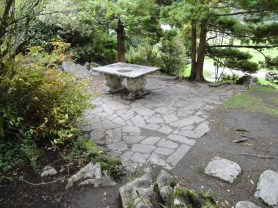
How might eldercare facilities respond to the needs of elders for environments that allow for their spiritual reflection and growth? Firstly, residential care settings should have quiet spaces both indoor and in natural settings. The spaces should be designed to facilitate meditation, prayer, or other spiritual exploration. Water features such as indoor or outdoor fountains, plants, and art or sculpture may offer inspiration or a meditative focus. Soft lighting, natural if possible, and subdued colors will encourage quiet, restful reflection. Shapes and textures should also be soft. In short, glaring, loud, or sharp features may disturb the sensitivities and intensities that many gifted elders experience (see a later blog entry for more on intensities).  The availability of soft, meditative, music – with the option of controlling the volume or turning it off – is also supportive of spiritual enhancement for some.

Reflective spaces should respect all spiritual frameworks. Thus, I would suggest avoiding overt and aggressive use of religious symbols. Incense or other aromas could be available for those who desire them. Books and meditative literature might be available, yet discreet.

There should be seating arrangements for individual as well as group reflection. Above all, these spaces should be non-clinical and as natural as possible. Also vital would be materials for recording thoughts and insights, and for journaling as one conducts a life review. I would suggest that a capable staff member or volunteer may also be available at set times to assist in the life review process.

In this series, we have examined four elements of responsive environment for elders: a virtual gifted community, literacy rich environments, freedom to self-regulate, and spiritual enhancement. By no means is this a complete list of what gifted elders need in residential eldercare. I offer these as a beginning, and I welcome your comments!


Responsive Environments for Gifted Elders: Part 3


away

Away*

Gifted Eldercare Comes of Age: Part 3

Once, when visiting a friend in an assisted living/eldercare home, one of the aides came to her suite while we were in the middle of a deep and meaningful conversation. “Wakey, wakey,” the aide said, “time for a shower.” Then, when my friend said she had a visitor and asked if she might be able to shower later, the aide began to make silly movements, acting out scrubbing under the arms and speaking to her as if she were an infant. Soon it was clear that we were not going to be able to continue our work until the aide completed her duty. I was saddened that my friend, one of the brightest people I know, was being treated in such a degrading fashion. Yet, similar behavior is not unusual at present, where our elders, far from being respected and revered, are often seen as objects to be washed, clothed, fed, and told to rest and not make a disturbance; and all on a strict schedule.

Freedom to Self-Regulate

The third element in the series Responsive Environments for Gifted Elders, is the freedom to self-regulate to the greatest extent possible within the confines of institutionalized care. Acknowledging that there must be a certain clarity of protocol and scheduling that eldercare staff members must adhere to, I suggest that there must also be latitude for our gifted elders to find their own rhythm within their new environments.

What might responsive environments that ensure elders the freedom to self-regulate look like? Firstly, caring administrators and staff members will respect individual choices to the greatest extent possible. In other words, my friend whose social visit was rudely interrupted could have been asked, upon seeing that she had a visitor, when she would be available for the aide to return. Another choice that is available in some, but not many facilities, is to allow the individual to select menu items within the structure of a well-balance meal.

Some of the residences I visit offer a one size fits all activity schedule.  A step toward allowing for self-regulation would be to offer the option of activities, rather than the same activity for all residents. While some might enjoy bingo, others might prefer word games, or checkers, or chess. In the day rooms, in addition to jigsaw puzzles, having on hand activities that allow for intellectual and creative risk-taking, such as 3-D puzzles, problem-solving games, and crossword puzzles, provide for the needs of high functioning elders who would benefit cognitively.

Elder gifted individuals are often introverts and need solitude, time for reading or individual creative work. As regulations allow and to the extent that it is healthy for them, they should have the option of choosing times when they will not be disturbed or forced to join group activities. Along that same line, as much flexibility as possible in scheduling will promote positive self-regulation as well. Being able to choose from two or three dining hour options, having the opportunity to be outside in the natural environment,  negotiating times for showers and other hygiene with the staff, presenting themselves for medications without having their names called on a PA system – all of these are examples of how our cognitively aware elders who may, due to health or financial circumstances, be confined to basic residential care, can continue to enjoy the dignity and respect they deserve.

Thus far in this series, we have explored the first three elements of responsive eldercare environments from a model that I have developed – a virtual gifted community, literacy rich environments, and freedom to self-regulate. The series will conclude with the next blog. Please know that I appreciate all the comments and support that I have received!

*Away: markittleman/Flickr/CC BY 2.0: https://goo.gl/eBJpeI (cropped)


Responsive Environments for the Gifted Aging (continued)

2587254285_7e5d265c7a_z

Lines of Faith*

Gifted Eldercare Comes of Age: Part 2

It is my honor to visit a number of older adults in local eldercare facilities each week. Much of what I observe there is an impetus to this blog. One of the ladies I used to visit prior to her passing was introverted, seldom left her room, and always had a book in front of her. One of her family arranged for her to receive boxes of books periodically on loan from the public library. If she finished a box before another replaced it, she would read some of the books again until a new box arrived. “Mary” would always brighten when I asked her about her reading, and she shared that she was hyperlexic, having learned to read on her own as a preschooler – an early trait of giftedness.

Unfortunately, other than in Mary’s room, I observe few books there or in the other eldercare residences that I visit. Print material is limited to a few newspapers and trade magazines.  In the last post, I shared the importance of enriching eldercare environments with technology as a way to respond to the needs of high-functioning elders. In this, the next part of the series, I explore the elements of literacy that will provide our elders with the necessary resources and tools that promote learning and creative productivity.

Literacy Rich Environments

Effective educators acknowledge the importance of literacy rich environments for young learners. Students with ready access to books and other print materials and with writing materials on hand for composition are at a learning advantage. In fact, books in the home is a prime factor in students’ later achievement.  In the same way, our bright, gifted elders, who have spent their lives with books, need settings that include the elements of literacy.

What would eldercare facilities that are that are literacy rich environments look like? We need only look at what reading experts promote for early readers.

  • There would be a library with a variety of genres of books available in standard print and large type, Braille, online, and audio-formatted. These materials would stimulate conceptualization and creativity, along with providing for reading enjoyment.
  • Print would abound throughout eldercare facilities, along with writing centers with computers, paper, and writing utensils where elders can compose and, if they choose, display their work.
  • The facility would offer visits by local authors to give book talks and there would be book groups where elders could read and discuss their reading together.
  • The directors would provide quality creative materials (not just craft materials) across disciplines that promote continued creative productivity.

Our gifted elders need more than a day room with jigsaw puzzles and a television. They need the opportunity to continue to engage their minds in thoughtful activities that can only be accomplished in literacy rich environments.

*Lines of Faith: Kamakshi Sachidanandam/Flickr/CC-BY-NC-ND 2.0: https://goo.gl/qi72Oe (cropped)

Responsive Environments for the Gifted Aging

meaningful

Meaningful*

Gifted Eldercare Comes of Age: Part 1

For the past several years, I spend much time visiting elders in residential care facilities. The residents I visit are of a range of abilities and awareness. Nevertheless, as with all our elders, they all deserve the best care that we can provide for them according to their needs. Just as enlightened societies have come to realize that universal health care is a worthy goal to work toward, it is my belief that universal, quality eldercare is just as important a goal. As a result of my research and analysis in this area, it has been my pleasure to present at conferences and to give webinars regarding the needs of the gifted in eldercare. As a complement to my presentations, I designed a model of what such an environment would be like. This post and the next few blog entries here will explore that model. It is important to note that, just like all gifted children deserve differentiated learning environments, so also do all gifted elders – regardless of income – deserve caring, responsive settings that promote their continued well-being and enrichment.

A Virtual Gifted Community

There are four crucial elements that contribute to the continuing enrichment and development in the lives of our elders. In this post, I share my vision of what the implementation of the first component, A Virtual Gifted Community, would be like.

One of the curses of the elderly is loneliness, which is even more patent in our mobile 21st century, where friends and family may live states, and countries, away from their elder’s care facility. As more members of a technologically proficient generation age and enter residential care, they will benefit from having access to video communication through software applications like Skype or FaceTime. In fact, the newer, more intuitive tablets would be relatively simple for most current seniors to master, even with no technical background.

Imagine what pleasure it would bring our older family members and friends to enjoy the regular video conferencing time that many of us as parents and grandparents appreciate. I have a friend whose family lives in South America who connects with them via Skype, and then leaves the camera on while the children are playing, giving the grandparents and other relatives the chance to delight in their antics. I would have loved to have had the same opportunity when my children were growing up in the 1980’s, three thousand miles away from their grandparents!

A virtual gifted community will also allow families to share photos and videos with grandparents and other family and friends. Gifted elders can continue to connect and collaborate with friends and colleagues through email and document sharing. Furthermore, with access to computers, elders can pursue diverse interests,  study new subjects with MOOC’s (massive online open courses), learn a new language, and more. In short, providing a few computers in the day room of a facility or having touch sensitive tablets available to check out will provide elders with connection, communication, and continued cognitive growth, all benefits of a virtual community.

My next blog posting will continue this series, sharing another facet of my model,  Responsive Environments for the Gifted Aging.

*Meaningful. Photo by Martin Gommel: martin­_grommel/Flickr/CC BY-NC-ND 2.0): https://goo.gl/onFGuF (cropped)

A Personal Journey ~ Part 2

Ireland Sept 2011 221

“Who we are is as important as what we publish.”

~Paul Brian Campbell, SJ

I continue to share my development from early age to late adulthood. It is not because I find my trek unique; rather, my path reflects the similar paths of many elders in our time who have journeyed through the decades since the mid-20th century. In doing so, they have been witnesses to extraordinary changes in our society, which has been transformed into a global, interconnected community and, in a sense, has left them as elders as keepers of the memories and guardians of the voices.

In my last entry, as a part of my own story, I shared the development and the potential loss of voice in girls and young women. I have witnessed the loss in many students as an educator and academic. Bright, capable girls reach a point, usually in late childhood and early adolescence, when voice is silenced – either by themselves or because of the actions of others. Both Gilligan (1982) and Miller (1986) shared insights in this regard from their research regarding the psychological development of women. They reported that girls, because of the very relationships that nurture them, are in danger of withdrawing into silence when they feel that speaking their mind risks those relationships. An example was “Hailey” in my previous blog, who was told she needed to silence herself in the classroom since no one likes aknow-it-all. How many times have we witnessed bright young girls who, in an effort to preserve friendships, go along with the opinions and wishes of their less capable peers despite their own beliefs, which remain silenced?

My own personal journey is one of losing (and finding and losing and finding) voice multiple times through the years. As an adolescent, like many high-functioning girls, I went “underground” with my true words in an attempt to fit into a world that refused to celebrate individualism. As a college student, it was not until I had professors in my major who encouraged my voice that I re-connected with Self. As a classroom teacher, again one was expected not to stand out intellectually, lest others feel threatened. A transformative moment came when I completed my doctoral work and moved into the academic world. What a pleasure to be heard and accepted by colleagues eager to involve me in research and decision-making! Now retired, as a student again in a clinical psychology program that is an entirely new paradigm for me, I find that I am at the beginning of the learning curve again. I am humbled by young graduate students, steeped in the literature and familiar with the scientific research model that I find so challenging. In addition, I find myself at odds once again with a society that conveys the message that at my stage of life, I should not be concerned with creative productivity. Yet, how glorious to hear voicereappear, strong and capable, as I worked with clients in practicum experiences.

The message I wish to convey through the sharing of my personal journey is that my perspective as a gifted elder is tinted with seven decades of disappointments, delights, and discovery. As you continue the journey with me, Dear Reader, it is my hope that – through knowing who I am – what you read in the posts that follow will resonate clearly and assist our gifted elders in finding their strong and rich voices, that they may continue their own journeys supported by a community and a society that celebrates their gifts.

References:

Gilligan, C. (1982). In a different voice: Psychological theory and women’s development. Cambridge, MA: Harvard University Press.

Miller, J. B. (1986). Toward a new psychology of women (2nd ed). Boston, MA: Beacon Press.


A Personal Journey

DSC01722

Dear Reader,

Please indulge me as I tell you a bit about myself as a gifted elder. It is my belief that knowledge of my personal journey might add to your understanding of some of the thoughts that you read in the posts that follow. I hope you agree that only through a thoughtful familiarity with our past do we perceive the meaning of our present and glimpse our future.

The third child of four and only daughter of two World War II era Southerners transplanted to the nation’s capital in search of finding a way to provide for their family, I spent my early years in the suburbs of Washington and later in southern Maryland, on the Patuxent River. Spending time during the summers either on the Atlantic coast, the Chesapeake Bay, or the river, imprinted in me a love of water and I lived most of the rest of my seven decades a half hour or less from either the east or west coast, or the fourth coast – the St. Lawrence River.

My earliest memory of being bright was when my kindergarten teacher, “Miss Betty,” visited our home and told my mother that she expected “great things from me.”  Through the years, others shared their belief in my abilities, but it was much too early for the “G” word (gifted) to be passed around. It remains for later posts to share why my confidence in my abilities was never quite as strong as the belief of others. For now, suffice it to share a few lines from my book, Nurturing the Gifted Female. As introductions to chapters in the book, I shared vignettes of gifted females in my study, each vignette representing a construct that I wrote about in the pertinent chapter. The chapter that addressed voice actually gives a narrative portrait of me, albeit with a different result. The following is a snippet from the vignette. Having taken poetic license, you will note some anachronisms in the literary references.

      Hailey discovered words the first time her mother read nursery rhymes and other poetry to her. She imagined herself playing with the words – tossing them up in the air and watching them spiral, leap, and dance.  Her favorite line early on was, “with up so floating many bells down” (Cummings, 1994). She invented special gestures to accompany the delightful sounds of her special words and shared them with all she met.

     One day she realized that she had the same magic as her mother since, suddenly, the shapes on the page began to speak to her and she could give them voice by saying them out loud. This discovery left her breathless with excitement. She knew, though she could not explain it even to herself, that this was a powerful gift and that somehow her life was very different as a result of this magic. Years later, she remembered reading to her parents for the first time and seeing her parents smile at her and at each other, as she read The Swing, by Robert Louis Stevenson. Even when she stumbled over the strange word, “pleasantest,” her mother took Hailey’s finger and sounded it out for her as they traced the word together.

      The day that Hailey began kindergarten she was so proud! Along with her pencil box filled with lovely pencils and crayons, she took her favorite book of poems to read to her teacher.  Miss Betty was very busy that day, but Hailey was sure that next day she would want to hear her special words. Yet, it was early spring before Miss Betty realized that her intense and imaginative student could read. By that time, Hailey no longer carried a book with her to school each day. Miss Betty thought that her reading ability was confined to the sight words on display around the room…

     When she was in the fourth grade Hailey encountered a different kind of words. After answering the science questions in class one day in a lesson that dealt with the same type of insects she had discovered and researched two summers before, Jimmy and Brad called her a “smarty pants” and said she needed to lose them. Hailey was deeply hurt and felt threatened in a way that she could not yet explain. It wasn’t long before most of the kids frequently made hurtful remarks about her abilities and her love of learning. Hailey began to say less and less in class and Mrs. C became frustrated with her lack of participation. It seemed that the girl she had thought of as her bright, shining star pupil was not so intelligent after all and that it would not be  a good idea to turn in the form she had completed recommending her for the school’s enrichment program (Navan, 2009, 27-28).

To be continued…

References:

Cummings, E.E. (1994). 100 Selected Poems. New York: Grove Press.

Navan, J.L. (2009). Nurturing the Gifted Female: A Guide for Educators and Parents. Thousand Oaks, CA: Corwin Press.

On Gifted Elders ~ A Beginning…

DSC01813

Welcome to my blog, a forum for thoughts about growing old gifted. It was my honor as a member of various gifted organizations to advocate for the recognition and needs of gifted individuals across the lifespan. Until quite recently, the focus of those who work in the field of giftedness was on the gifted child and adolescent. In the last few years, researchers and advocates began to write more about the characteristics and needs of the gifted adult. Presently, interest is growing regarding the specific needs of aging gifted individuals.

A few years ago, I wrote the following words as part of SENG’s (Supporting Emotional Needs  of the Gifted) “100 Words of Wisdom” project.

“We did not hear the word gifted as a child. We thought we were odd. Even as we age, it is difficult to say aloud, “I am a gifted adult.” We realize the differences in our reasoning, but mostly in our feelings. When loved ones hurt, we feel physical pain. A breathtaking sunset brings tears to our eyes. We lie awake at night, wishing we could set things right in the world. We labor to internalize the wisdom of Candide to tend our own garden; and, when we do so, it is with an intensity that could ignite the universe.”

The numerous  responses I received to those mere one hundred words were an impetus to my own reflections on the many gifted adults and gifted elders that I have known and who have touched my journey so deeply. My mentor, Annemarie Roeper, in her book Beyond Old Age, wrote of her experience as an aging gifted adult. “Much has been said and written and researched about gifted children. Gifted adolescents also have a place in the consciousness of researchers. But it seems that there is a dearth of information when it comes to the gifted adult and giftedness in old age has not, as yet, caught our attention as a worthwhile subject of investigation. All elders have the task of keeping their minds carefully trained, and to keep on using them” (Roeper, 2011, 23).

Annemarie’s words bring me to the reason and rationale for this blog. Through this window I intend to share with you, the reader, and the entire gifted community, the current thoughts and research regarding gifted elders, their characteristics, their strengths, and their lives. It is my hope that we may awaken an awareness of the needs of gifted elders to have family and caregivers who acknowledge and honor their giftedness and who understand that,  just as gifted students need differentiated learning experiences that respond to their unique needs, our gifted elders need responsive communities and residences that respond to the intensities and the wisdom or our gifted elders.

References:

Navan, J. (archived). 100 Words of Wisdom. Archived online at:  http://sengifted.org/archives/articles/100-words-of-wisdom-joy-navan

Roeper, A. (2011). Beyond old age: Essays on living and dying. Berkeley, CA: Azalea Press.