A is for Ambience


photo-1419640303358-44f0d27f48e7 (1)*

    My husband and I recently completed a master bedroom makeover – freshening the paint and changing out wall-to-wall carpeting for hardwood floor. As we moved the furniture back in, we tried a new arrangement and placed the bed on a different wall, with floor to ceiling windows on either side. Even though the same night table and lamp are still next to my bed, something about the new arrangement awakened in me the desire to return to a bedtime activity that had been my habit for most of my seventy-one years. Thus, so I have and I am enjoying feeling “whole” again.

    What is it about the environment that influenced me to give up my nighttime reading in bed for the last ten years, and what has changed? I really cannot put my finger on it,  if not that our room is more spacious now, and that the wood floor gives it a warmth that it lacked before, and the soft rain on the window next to my head is so soothing. Nevertheless, change prompted me to sink again and with pleasure into an activity that I enjoyed for most of my years and that I abandoned, not knowing why.

    What activities that you enjoyed in the past have disappeared from you current lifestyle? How can you recapture the enjoyment again? What small changes can you make in your schedule or your environment to recapture them?  A is for Ambience.

Note: This is the first of my posts as part of the Blogging from A to Z April (2016) Challenge

* Photo by Jez Timms ~ https://goo.gl/2x4TQE

Age Integrated Gifted Discussion Groups

4271147412_3b0056d347_z (1)

Grandparents*

               A few years ago, a friend of mine – who had participated in a parent discussion group with me – called to ask if I would be willing to facilitate a group for bright elders. My friend said that she often interacted with older adults as part of her professional work. Furthermore, being the parent of gifted children and in coming to understand her own giftedness, she recognized giftedness in some of her elderly contacts and realized that they needed the opportunity to interact with others who shared their interests and intensities. Through participation in a gifted discussion group, they would learn about their own strengths and needs and assist each other in navigating elderhood as gifted individuals. While it is worthwhile to gather gifted elders together and promote their relationships with like peers, I choose here to share a different model, based on human history and experience.

              The concept of age integration, in contrast to age segregation, is defined as a social structure, “that does not use chronological age as a criterion for entrance, exit, or participation” (Uhlenberg, 2000, p. 261). Throughout time, societies with extended familial and social networks were integrated age-wise. Young ones, adults, and the elderly together labored, learned, and interacted on a daily basis. In contrast, in our more recent past, we have delineated social boundaries in which schooling is for the young, work for middle adulthood, and leisure for the aged.  Lately, we have seen some shifts in the age-segregated paradigm. For example, more older adults are returning to school and some professionals are opting out of the strict career track and creating other individual options such as job-sharing, choosing to stop work every few years for self-declared sabbaticals, or creating home-based cottage industries with limited work-focused hours. However, for the most part, we follow an age-segregated social model. This is perhaps most apparent in residential care facilities for the elderly.

            An idea related to the concept of age integration is cross-aged interaction, which is achieved when individuals or groups of different age alignments (e.g., children, adults, elders) come together to perform activities together. There are some noteworthy examples of cross-aged social structures that are proving themselves beneficial. For example, at the Ebenezer Ridges Care Center in Burnsville, Minnesota, daycare means both senior care and child care. At the center, seniors and elders with an age range from 60 to over 100 play, draw, and read together with children from infancy through preschool.  The elders benefit from the stimulation and being of service to others, and the children learn from and appreciate the elders.

             A similar program in Seattle is Bayview’s Intergenerational Children’s Center, a day care for infant through preschool children that is housed on the campus of a retirement community offering independent, assisted living, and skilled nursing facilities. Teachers at the children’s center follow a curriculum that promotes positive interactions through integration of planned activities with seniors. Both groups benefit from these cross-aged arrangements. Seniors have sustained interaction with children, which improves memory and other skills. Additionally, the interaction with young students is a defense against the depression that isolated elderly often experience. Improved socialization skills and developing empathy for others are just two areas of positive impact for the children. 

Age-Integrated Gifted Discussion Groups

             I am a strong believer in offering a variety of gifted discussion groups to gifted individuals of all ages. Gifted children should have the opportunity to comingle with like peers in a safe, nonjudgmental environment where they can share their personal experiences of being gifted and support each other with difficulties (e.g., how to respond to teasing, ways to take advantage of – and cope with – intensities). Likewise, parents of the gifted need a forum in which they can discuss the intricacies of parenting gifted children, engaging in group problem solving as needed. Gifted adults, be they parents or not, are in need of the opportunity to meet with other gifted adults, to recognize, understand, and celebrate their giftedness. Lastly, gifted elders need to gather with their peers, as they navigate the great unknown – the life  of the gifted elder.

              It is also incumbent on the gifted community to assist in creating cross-aged gifted discussion groups. Just as I find as an elder that when I mentor elementary school-aged children both of us reap the benefits, cross-aged discussion groups will enrich each age group as well. The young will benefit from hearing about the individual journeys of gifted adults and elders. They will learn to differentiate wisdom from knowledge, and begin to develop executive thinking skills from others who have walked the path of giftedness. Additionally, the adults and elders will serve a role models to the young, who often have little chance to interact with more than two or three other gifted individuals in an age-segregated school environment.  There can be tremendous benefits to participating in cross-aged gifted discussion groups for adults and elders as well. Adults will reap the wisdom of their elders and elders will feel less isolated and perceive themselves as more understood by having a chance to share their lonely journey with others. 

              The Hoagies’ Gifted Education Page Blog Hop charged the bloggers who are participating this month to explore the formation of gifted groups and to answer the following questions.

  • Why do we need them? 
  • How do we form them? 
  • How can we maintain them, and keep them positive and forward-thinking?  
  • What groups would YOU like to be a part of?

               In this post, I explored the first and second questions to an extent. I invite the readers to comment on any of the other questions. We will explore your answers and more in a future post.

References:

Bayview Retirement Community.  http://www.bayviewcommunity.org/intergenerational-childrens-center/pre-school-education/.

Estrada, H. M. (2011, 28 June). Two precious groups, one day care solution. Star Tribune. Retrieved from http://www.startribune.com/two-precious-groups-one-day-care-solution/124626328/.

Uhlenberg, P. (2000) Introduction: Why study age integration? The Gerentologist, 40, 261-266.

* Grandparents, jbstafford/Flicker/CC BY-NC-ND 2.0:  https://goo.gl/QT2wB1

This blog article is part of the Hoagies’ Gifted Education Page April 2016 Blog Hop on Forming Parent Groups and Other Gifted Groups. I thank my friends at Hoagies’ Gifted Education Page for their inspiration, support, and suggestions over the last two decades.

Please click on the link below to see to the titles, blog names, and links of other Hoagies’ Blog Hop participants.

www.HoagiesGifted.org/blog_hop_gifted_groups.htm

Courage ~ An Integral Element in Gifted Aging

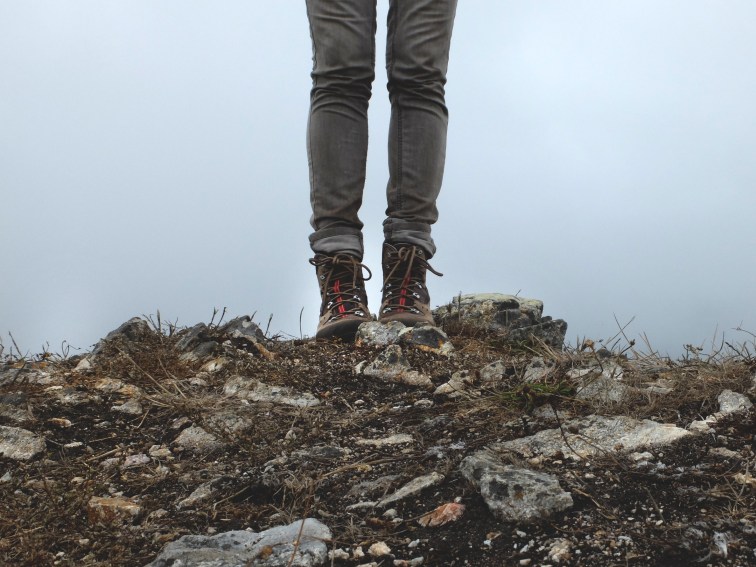
trekker.jpg

Wanderlust*

          A few weeks ago, I spent a weekend with a friend who is like a sister to me as we viewed exquisite works of art and learned about a new place. Since we met a number of years ago, my friend and I have both felt a friendship connection and we share a number of abilities and interests. It came as a surprise to me during one of our afternoon conversations over that weekend when my sister-friend, a highly accomplished professional, disclosed that she had a fear of venturing out and traveling on her own. She said, having been married at 18 and divorced late in life, that she did not experience that phase between leaving home and settling with a partner, in which many travel and come to know self as a single, independent individual. I, on the other hand, left home in my early twenties, traveled on two continents, studied in three different countries, hiked and camped alone in the Rockies and Adirondacks, and had (and continue to have) myriads of self-directed experiences. Our conversation aroused my reflection, leading me to wonder what brings one person to the point of liberated wanderlust, while others are not impelled to, in the words of an eminent Canadian woman, follow their bliss (Leroux, 1994).

              A similar story of the desire to travel, yet an extreme example, piqued my curiosity even more. I read an article yesterday about Sarah Marquis, a solo extreme walker, who trekked alone from Siberia to Australia, and across that continent’s deserted outback and plains. That is, she walked 10,000 miles from Siberia, across the Gobi Desert, through China, Laos, Thailand, by boat to Australia, finally crossing it in its entirety.

             I ask, from whence such courage? I will admit that many people in my life have thought it abnormal for me to have – still, in my seventies – such a burning desire to see new places,  to learn about new cultures. For Sarah Marquis, it began when, at the age of eight, she left her home one day to explore without her parents’ knowledge and spent the night in a cave alone. For me, my parents tell of a time before my own memories when I climbed out my window at naptime and went to have tea at a neighbor’s home. Then there was the time as a second grader that I skipped school for half a day and spent the morning playing with my doll in the forest near our home. When a world globe arrived at our house, my younger brother and I would entertain ourselves for hours trying to note remote places on it and challenging the other to find them. Still, these memories do not tell why, or where, the courage originates.

              Sarah Marquis’ statement of courage and drive is as follows. “For me, walking is more than walking. I’m like a little bridge between humans and nature. I’m just there to try to communicate this connection that we’ve all got. It takes determination, a lot of courage, and a lot of perseverance. It takes a lot, but anybody can do it.” 

              For myself, though in hindsight I realize I have been in risky situations that could have easily turned dangerous, it is not so much the courage to endure the physical hardship like a true hiker or extreme trekker. Rather, my challenge was to have the courage to be alone with myself in strange places.  

              Being alone in a strange place is what I see aging as; the courage to be alone, even when one has a partner, in a new and strange place. There are different ways to view this new kind of aloneness. The byline of this blog  is, “finding joy in the journey.” In a future post, I will share some of the ways that courage and other elements are integral to finding joy in aging.

References:

Cahall. F. (2014). Adventurers of the year: Explorer Sarah Marquis. National Geographic. Retrieved from http://adventure.nationalgeographic.com/adventure/adventurers-of-the-year/2014/sarah-marquis/

Leroux, J.A. (1994). A tapestry of values: Gifted women speak out. Gifted Education International, 9 (3), 167-171.

*Photo by Amanda Sandlin ~ https://goo.gl/RDQRbB

Understanding the Fears of Gifted Elders

storm.unsplash.jpg 

Storm*

     In our region of the country, tornado watches and warnings are frequent. Not surprisingly, one of children’s intense fears that parents of gifted children mention to me most frequently are tornados, even in very young children.  Gifted children, because of their intellectual abilities, develop a keen awareness of potential dangers earlier and more intensely than other children their age. Consulting the literature regarding gifted children, fears that are mentioned frequently among many gifted children are fear of death, separation from or loss of a parent, war, and other social and environmental concerns.

     Changing our perspective to consider gifted elders, again we see that their fears are different and also are much more vivid and intense than those of their age peers. For example, in an article regarding a national survey of the ten most common fears of seniors and elderly, the author lists both loss of independence and fear of isolation or loneliness. While many gifted elder individuals agree that the potential loss of independence as they age is a personal anxiety, a large segment of the gifted adult population consists of introverts.  Thus, they relish their time alone and a powerful fear for them is the reality of residential care facilities in which personal space is at a premium and schedules require that they socialize with others on a daily basis on a schedule that is set by the staff and not by the elders themselves.

     Declining health is another important concern for elders and seniors. Equally, it is a concern for gifted elders. Yet, even more so for many of our gifted seniors, the fear of the loss of their mental faculties is a dread that they voice. As I wrote in an earlier post, the quest for creative productivity is a lifelong pursuit for bright individuals and the fear of losing the ability to create before the completion of their creative agenda is palpable and intense. In addition, due to health problems or just the act of aging, the energy that they have for their creative pursuits dwindles as they grow older. Coupled with the fact that for many, the pace of their work slows, gifted elders feel the pressure to finish their life work in order to leave a tangible legacy. 

     The emotional lives of gifted individuals are rich and deep. Pearl Buck’s eloquent words below appear often in literature about gifted individuals as an illustration of the depths of sensitivity they possess.

The truly creative mind in any field is no more than this:  A human creature born abnormally, inhumanly sensitive. To him… a touch is a blow, a sound is a noise, a misfortune is a tragedy, a joy is an ecstasy, a friend is a lover, a lover is a god, and failure is death. Add to this cruelly delicate organism the overpowering necessity to create, create, create — so that without the creating of music or poetry or books or buildings or something of meaning, his very breath is cut off from him. He must create, must pour out creation. By some strange, unknown, inward urgency he is not really alive unless he is creating (in Iglesias, 2001, p4).

Buck’s words give us an clear understanding of giftedness, assisting us in appreciating the intensity of fears that gifted elders experience toward the end of their lives – fears of dying before mending difficult relationships and before sharing all that they feel with loved ones, along with fears of losing or leaving loved ones behind.

     There are other fears that all elderly individuals remark on when asked. They include not having enough money to last until their deaths, inability to manage their own physical needs, loss of driving privileges, and fear of falling. The final point in this post to emphasize is the need for caregivers to understand that, due to their rich and active cognitive abilities and their emotional giftedness, gifted elders are much more reactive in terms of the seriousness of their fears and their heightened sensitivities will affect all areas of their lives and well-being. They need understanding caregivers, educated in the nature and needs of gifted individuals, who can respond to them and differentiate services as needed. 

References:

Iglesias, K. (2001). The 101 habits of highly successful screenwriters.  Avon, MA: Adams Media.

Johnson, R. Z. W. (2014, 18 September). 10 most common fears of seniors and elderly. Retrieved from http://www.eldercareresourcesphoenix.com/10-most-common-fears-of-seniors-and-elderly/.

*Photo by Guillaume, at http://www.unsplash.com (https://unsplash.com/photos/revxuIor0nY)

Efficacy, Lost and Gained

photo.by.christopher *

My readers might have noticed that it has been some time since I last posted here. The reason is that a few days ago, I defended my thesis in clinical psychology and my time was spent over the last several weeks finishing and revising (and revising, and revising) my paper. Although this should seem like “old hat” for someone with a doctoral degree in educational psychology, I must share that the journey through a master’s program in clinical psychology has been a harrowing process for a number of reasons, including three heart procedures in the midst of it. Aside from health reasons though, I have found myself on a constant roller coaster of efficacy, lost and gained.

A few months before retirement as a professor of gifted education, I received admittance to the clinical psychology program at a local university. In our state, with the master’s degree and successful completion of a national exam, one may practice as a licensed psychological associate under the supervision of a licensed clinical psychologist. A successful defense of my thesis was the last step in completing the degree, allowing me to turn my attention to preparing for the licensure exam.

Why would I, in my seventies, choose to follow this path? Mainly, my decision stemmed from my work as a consultant, where often I encounter parents of gifted children who fear that their child has a disorder that requires the intervention of a counselor or psychologist.  Although it is usually the case that what may seem to be the child’s difficulties are merely the way that giftedness is manifested in the individual.  As an educational psychologist, I am not licensed to clinically assess or to treat disorders. Thus, in my role as a consultant, I cannot tell parents whether a clinical disorder that needs treatment exists or not. My only recourse is to refer the parents to a psychologist with strong knowledge of giftedness and its social and emotional manifestations. Unfortunately for those parents and gifted children in our area, the nearest psychologist with training and experience in giftedness is several hours away.  Often parents cannot travel such a distance regularly, opting either not to visit a mental health professional, or to see someone who lacks comprehensive experience in treating gifted individuals. Therefore, I hope to offer parents and their children a viable choice as a result of my clinical training.

Efficacy, lost and gained.

In my book, Nurturing the Gifted Female: A Guide for Educators and Parents, I described a number of gifted young women who possessed strong self-efficacy. For them, self-efficacy is recognized in their perceptions of themselves as capable of setting challenging goals and as having the ability to accomplish those goals. When I asked one of the girls what was the source of her efficacy, she replied,

“I can do everything! It’s in my Self, my successes, my environment, within me.” (p. 67)

The young women demonstrated efficacy in a variety of ways – intellectually, emotionally, and behaviorally. Intellectually, all of the girls were in accelerated learning environments, taking challenging advanced courses, in which they set high academic goals for themselves. Emotionally, they believed themselves – and demonstrated that they were – capable of coping with difficulties and learning from them. Behaviorally, they showed that they were capable of acting in ways that reflected one’s true Self in different environments.

Returning to my own struggle to go back to school for an advanced degree in late life and in an area of study completely new to me, I have experienced an almost total loss of efficacy a number of times. For example, memorization of new material takes much more effort that it did even as recently as when I studied for my Ph.D. in my late forties and early fifties. Learning and applying observational and therapeutic skills was at times easy since I was able to call on familiar frameworks from my life as an educator. At other times, learning and using what seemed to me to be stiff and unnatural protocols felt awkward and was almost painful.  Perhaps most significant was the diminishing energy I felt. I often wondered where I would find the physical resources to complete hours and hours of a statistics assignment with a computer program that baffled me or to study for a social psychology exam that my fellow graduate students were able to accomplish much more quickly and who were able to function on much fewer hours of sleep than that which I required.

When health problems slowed me down, I asked myself frequently why would I, with a decent retirement and at a time in my life that I could take it easy, put myself through such stress and misery.  Then I would remind myself that I had set a goal and that who I am as an individual is someone who works to accomplish her goals. Additionally, I realize that, were it not for a number of individuals, I would never have re-discovered my sense of efficacy. Firstly, I have a spouse who continued to support my efforts and knew when to push a little to help me get back on track. Secondly, some of my professors – especially my thesis director – went way beyond that which was required of them in assisting me in my learning. Finally, the other graduate students, all much younger than me, were kind, open, and welcoming of me and encouraged my efforts.

Efficacy and the aging process.

How is my story like the aging process for gifted elders? As we age, our bodies and our minds often diverge. What I mean is, while our minds continue to search for new learning and want to continue our creative productivity, our health and our physical capabilities may often curtail or limit those efforts. It is so sad for me when I visit some of “my ladies” whose minds are still so active, yet they are limited by the confines of residential care facilities to a sparsely furnished room and a dayroom that offers no intellectual stimulation.

For those of you who regularly interact with gifted elders, how can you support them and help them to continue to feel efficacious in a world where their dwindling capabilities and loss of personal freedom are constants? Returning to the concepts of intellectual, emotional, and behavioral efficacy, I offer some suggestions.

  • Intellectually. When we visit our gifted elders we can engage them in conversation that allows them to call on their strengths. If the elder was a nurse, ask him or her about some of the most enjoyable or intriguing cases. If you know music lovers, bring in recordings of a favorite composers and ask them to teach you about the piece. Intellectually stimulating conversation, books and other resources, and giving them the opportunity to share their knowledge will reinforce efficacy.
  • Emotionally. One of the residents I visit regularly is confined to a wheelchair. Other than some memory difficulty, my friend is alert and conversational. She is a very gracious person and it is always a pleasure to visit her. Her room is a refuge in an otherwise depressing rehabilitation facility. Although I do not do therapy at this stage, during our conversations, I ask her to share her emotional strengths with me, thus reinforcing her emotional efficacy. If there is something that is bothering her during a visit, we engage in conversation about how she has coped with similar difficulties in the past. Her memories spark a problem-solving process, reminding her of coping strategies she can apply to the present.
  • Behaviorally. It is important to encourage our gifted elders to sustain their physical strength and mobility. If they are capable, walking through the halls of the residence, going out to a porch or garden, are ways to encourage activity. Often, we are the only ones who suggest these activities and by doing so, we remind them that they are capable and that they can initiate the activities on their own or with others.

Our life journeys are filled with experiences of efficacy, lost and regained. Assisting our gifted elders in regaining a sense of efficacy will increase their quality of life significantly.

* Photo by Christopher at Unsplash.com 

Reference:

Navan, J.L. (2009). Nurturing the gifted female: A guide for educators and parents. Thousand Oaks, CA: Corwin Press.

Elusive Love Affair: Achievement from an Elder’s Perspective

Ireland Sept 2011 074

Science is like a love affair with nature; an elusive, tantalising mistress. It has all the turbulence, twists and turns of romantic love, but that’s part of the game.

V.S. Ramachandran

Looking back on a lifetime of twists and turns as it relates to personal achievement, one could easily capture its essence by replacing “science” in the quote above with the word, “achievement.” For most gifted elders, achievement – or perceived underachievement – has been like an elusive love affair, wrought with periods of intense creative productivity and hindered at times by the realities of the human condition. It is my observation that this is the path travelled by many gifted elders. Allow me to explain…

The term need for achievement (N-Ach), first used in the past century by Henry Murray (1938) and quite popular in leadership literature throughout the past century and up to the present, is the distillation of a psychological disposition that individuals have and that manifests itself as a drive or impetus towards accomplishment. As a psychological variable, some experience N-Ach more intensely than others do. Furthermore, gifted adults are generally known for their strong drive toward accomplishing difficult goals and their incentive to constantly be learning, creating, and improving themselves.

How does N-Ach look in the gifted elder?  In my own case, six months into my 72nd year, I avidly continue to read self-improvement articles. In addition to subscribing to new courses on MOOCS (mass open online courses), I also persevere in trying out new organizers or productivity apps (Pomodoro, KanBan) in the hopes of finding the perfect system. A late-bloomer, I completed a B.A., M.A. and then took time off from my studies to raise children, while also teaching fulltime. Achieving a Ph.D. in my early 50’s, I recently retired for a second time as a full professor at a highly respected southern university.  I promptly returned to life as a student and I am now within a couple of months of completing a Master’s in Clinical Psychology. I have known and interviewed many elders whose professional paths took a circuitous route like mine. Nevertheless, N-Ach is ever present and persistently driving them forward.

When is enough, enough?  To continue growing, learning, and achieving is part of the nature of giftedness for many adults and elders. The intellectual imperative we might call it, or the impetus to self-actualize oneself – to fulfill the blueprint of potentiality with which we were born. For some, it is impossible to turn off the N-Ach switch.

I remember my friend and mentor, Annemarie Roeper, who continued writing and publishing into her nineties. A few years before her death and continuing until her final months, she would share with me her lament at the growing disparity and disconnection between her mind and her body. In her book, Beyond Old Age, she wrote,

How do you find yourself in older old age? Rather, how do you find your new position in life?    Is it a new period ofdependency? Or is it in some way a repetition of childhood, only instead   of having a growing body, geared toward attaining independence, you have a disintegrating body, and you don’t know how far you are yet going to sink.

The discrepancy between what we still want to achieve and the limited energy and concomitant health needs of elderhood emerges during our waning years in stark contrast to the exuberance and limitless zest we remember as who we were as recently as seemingly yesterday. What is more discouraging are the reactions of some that belie their thoughts that we should be happy to rest, take it easy, and enjoy our golden years of leisure. Yet we have promises to keep.

For those of us who continue to be propelled forward by our N-Ach, that is our drive to continue to contribute to our world, there are a number of tasks we must master. Firstly, we must negotiate a truce between our minds and our bodies. One step in accomplishing this task is to be ever mindful of when our energy is strong and to take advantage of those times to work.

Another task is to recognize that our time is not limitless and to decide what we can and what we will not accomplish during our final years. I recently had to bow out of a project with a group of colleagues that I love and respect because it was clear that I could not participate with them, finish my clinical psychology studies, prepare for the licensure exam, and have the energy left for my writing agenda, which includes blogs and two separate book projects.

An additional task for the achievement-oriented elder is to reconcile oneself with the fact that enough is enough. In other words, what we have accomplished, if it contributed to the betterment of our loved ones, our profession, and our world, is worthy. The love affair is a success!

References:

Murray, H. A. (1938). Explorations in personality. New York: Oxford University Press

Roeper, A. (2011). Beyond old age: Essays on living and dying. Berkeley, CA: Azalea Press.

This blog article is part of the Hoagies’ Gifted Education Page February 2016 Blog Hop on Other Achievement. I thank my friends at Hoagies’ Gifted Education Page for their inspiration, support, and suggestions over the last two decades.

Please click on the link below to see to the titles, blog names, and links of other Hoagies’ Blog Hop participants.

www.HoagiesGifted.org/blog_hop_other_achievement.htm

Promoting Healthy Sleep in Gifted Elders

Ireland Sept 2011 065

In my last blog posting, I shared information and new research regarding sleep needs in our elders. Older adults are prone to sleep difficulties and, therefore, their sleep efficiency (the ratio of time in bed to time asleep) is poor.  Individuals who have lived with sleep-related disorders (e.g., fibromyalgia) learn ways to promote sleep efficiency. The following are some of the techniques and rituals that I have found are helpful for falling asleep and enhancing beneficial, sound sleep.

  • Reduce screen time in front of television and electronics in the evenings for at least two hours before bedtime. These devices emit bluish-white light, which suppresses our production of melatonin, a chemical in our brain that signals us that it is time to sleep.
  • Dim the lights at night a few hours before turning in for the night. This produces a calm, soothing environment for the gifted elder.
  • If the older adult needs some light when getting up during the night, use a soft nightlight placed at a strategic spot to assist in navigating the dark. Some residential facilities now use softly lighted door frames, rather than bright hallway lights. Soft lights guide residents safely without encouraging wakefulness.
  • Find what activity helps the gifted elder to wind down at the end of the day. It may be reading with a small reading light, sketching, knitting, doing a jigsaw or word puzzle, listening to relaxing music. Any type of quiet activity that can be developed into a nighttime ritual will serve as a trigger, telling one that it is time for the mind and body to prepare for sleep.
  • Sounds from Nature – ocean waves, rain, ripples from a stream – are relaxing and useful as sleep aids. One of my treasured gifts from a son who understands my sleep difficulties is a sleep sound machine that generates these and other natural sounds.
  • Some find aromatherapy helpful. Lavender, chamomile, bergamot, and sandalwood are some scents that come to mind. A few drops of one of these essential oils on a cotton ball placed near one’s pillow may be beneficial.
  • Deep breathing, muscle relaxation, or guided imagery may be useful in falling asleep. I have a number of scenarios of favorite places that I have visited – a restful beach, camping in the mountains,  and others, that I use as guided imagery visualizations to relax and prepare me for sleep.

Sleep experts tell us to try to go to sleep and to awaken at the same time every day. This sets up our natural circadian rhythm. Also, if a nap is needed during the day, limit it to a fifteen minute or so power nap in the early afternoon.  Exercise during the day is important, but it also vital that we exercise early enough during the day to allow our bodies to cool down from exercise into a more sleep receptive state.

These are just a few of the sleep techniques I have found work for me and for others. I would love for my readers to comment with other suggestions. Sleep tight!

Let There Be Healthy Light ~

22356007364_08cbece334_z (1)

Pier at Sundown*

Sundowner’s is a term easily recognized by friends and families of elders who suffer from certain types of dementia. Sundowner’s, or sundowning, is a syndrome which manifests itself in many individuals with Alzheimer’s disease or other dementia-related diseases. The changes in light at the end of the day may produce behaviors such as agitation and restlessness, anxiety, fear, anger, and even paranoia. It is difficult to reason with someone who is experiencing Sundowner’s and caregivers are at a loss as to how to reduce its occurrence.

Similarly, adults – and elder adults in particular – may present with sleep difficulties. Research findings document that up to 70% of older adults have sleep disturbances or sleep disorders. I would suspect that the statistic is higher with gifted elders due to their intensities. As with sundowning, light and how our brains process light is often connected to problems falling asleep or difficulty staying asleep. Thankfully, there is much research in progress that is assisting elders and their caregivers by offering ways to  promote healthy sleep.

An article I read lately helped me to understand how proper light at appropriate times during the day is key to good sleep habits (see reference below). Receiving light at different times during the day or evening can support or disrupt the circadian rhythms that control our sleep drive.The author explained that we receive visual information as light that is processed by three different types of photoreceptors. In addition to rods, which enable seeing in dark, low-light, and cones, that process visual information in daytime settings, a new kind of photoreceptor was identified in 2003. Intrinsically photosensitive retinal ganglion cells (ipRGC’s) receive information from rods and cones, but use a different brain pathway to transfer visual input from the retina to the part of the brain that controls our circadian rhythms.

Circadian rhythms are necessary for promoting healthy sleep-wake cycles. When the natural rhythms are upset, we have trouble initiating, maintaining, and waking from sleep. The ipRGC’s are most responsive to bluish-white (or short wave-length) light. This is the form of light that suppresses the production of melatonin, a chemical in the brain that helps to maintain circadian rhythm and promote sleep or wakefulness. When light level is high, such as in daytime, melatonin production drops and we are more wakeful. With the onset of the dark at nighttime, melatonin production increases and we are more sleepy.

Researchers at the Light and Health Center of Renssalaer Polytechnic Institute have developed a light table that emits bluish-white light (i.e., daytime type) and they investigated its use in residential care facilities for the elderly. Residents gathered around the light table at meals and were free to sit around it anytime between 6 a.m. and 7 p.m. As a result of the use of the table over time, caregivers recorded a 10% increase in sleep efficiency among residents who used it. Sleep efficiency is a calculation that represents the ratio of time in bed to time spent sleeping. The less time we take falling asleep and the more time we stay asleep, the better our sleep efficiency. Additionally, those elders displayed a substantial decrease in depressive symptoms and agitation.

The take away from the information in this blog post is, in essence, for elders and their caregivers to be aware of and encourage healthy light therapy in order to combat the sleep-related problems that can plague gifted elders. Thus, it is important that our elders receive as much natural daylight as possible during the day – especially in the winter months. In addition, it is vital that at night we begin to eliminate unhealthy sources of light (in particular the bluish-white light of electronic devices) for two hours or more prior to bedtime.

As an individual who has learned to manage fibromyalgia for more than three decades, I have developed what I term “sleep rituals” to help the sleep issues that are inherent with the disorder. In my next post, I will share suggestions that may enable and enhance healthy sleep in our gifted elders. I welcome your suggestions as well!

*Pier at Sundown: marccooper (marc_cooper/Flickr/marccooper/Flickr/CC0 1.0) https://goo.gl/92R25R (cropped)

~ Elfing Gifted Elders ~

4043364183_a3f0de073b_z

Chess with Champagne!*

Elves for Elders is a movement that we see growing across the country. It is an initiative in which community members gift elders in residential care homes. Suggestions for gifts include toiletries, slipper socks, note pads and pencils, popular magazines, and treats. These are all fine ideas and will help individuals feel cared for during the holidays. However, just as we differentiate instruction for students in our schools, perhaps we want to consider responding to other wishes in terms of the cognitive needs of our gifted elders.

Here I offer some suggestions of ways to differentiate giving for gifted elders. Many of the elves for elders websites that I visited emphasized the gift of our time as one of the most precious treasures we can give the elderly. I wholeheartedly agree! With that in mind, here is my wish list for our gifted elders.

  • Take a board game like chess, checkers, backgammon, or other game that you know the resident enjoys and play a few games.
  • For the music lover, bring your mp3 player or other digital device with a favorite symphony, opera, or music from the past to enliven your visit. Or, if you play an instrument, perform a mini-concert for a group of residents. This would be even more fun if you bring a group of musician friends along.
  • Visit with family members or a group for few games of bridge, pinochle, or other card games.
  • For art lovers, bring your laptop or tablet and spend some time virtually visiting some of the world’s finest museums. You might ask your gifted elder what museums he or she has visited and to share stories of the visit and to talk about favorite works of art.
  • Take a recording device and ask the elder to share some life stories with you. Then, for your next visit, transcribe the stories, and – if you have the talent or know someone who can do so – illustrate them, bind them in a pretty portfolio to give to your elder on your next visit. This can be done over a number of visits as well.
  • Perhaps your gifted elder has the ability to paint or draw (remember Grandma Moses, who began seriously painting at the age of 78?). If so, take some art supplies and model for him or help her create still life scenes to illustrate.

These are but a few ideas for stimulating the creative and skillful abilities of our elders. I am sure you have many as well. Won’t you share them with me in the comments below?

*Chess with Champagne!: tristanmartian/Flickr/markittleman/Flickr/CC BY-SA 2.0: https://goo.gl/tI8VlY (cropped)

~ Bucket Lists ~


Ireland Sept 2011 181.JPG

“The woods are lovely, dark and deep. But I have promises to keep, and miles to go before I sleep.”

~Robert Frost

Among my preferred thought-talk shows are National Pubic Radio’s Fresh Air, with Terry Gross, and The Diane Rehm Show. Their interviews and conversations with authors, actors, musicians, political leaders, and others always hold my interest and leave me feeling that I have engaged in a worthwhile listening activity. Thus, upon hearing that Ms. Rehm will retire during the coming year left me feeling a bit sad and surprised. I wonder if others among the 2.4 million listeners that tune into her show each week feel likewise?

In truth, I had no idea that Diane has reached the age of seventy-nine. Yes, her voice sounds older, but I always thought that was due to spasmodic voice dysphonia disorder, which she has suffered with for years. Otherwise, she is alert, vibrant, and is by no means showing any signs of cognitive aging.

What really caught my ear when I heard Steve Inskeep of NPR Morning Edition speak with her earlier this week, was her continuing zest for life and list of future projects. She plans to work through the upcoming presidential campaign, she shared that after retiring from her show, she will work for UsAgainstAlzheimer’s, continue to work and advocate for a cure for Parkinson’s, create a series of podcasts, and more.

“Voila!” I thought immediately.“A gifted elder’s bucket list!”

The concept of bucket lists is not a new phenomenon – the To Do list of tasks one wants to accomplish before one dies. For some, popular desires include such activities as, visit the Acropolis, skydive, or kayak down the Amazon.  While these and similar wishes are understandable, it is my belief that gifted elders have lists that – even though they may include some of the same activities – are qualitatively different.

Age wise, I share the same decade as Diane Rehm, although I have not yet reached the cusp of eighty years as has she. My life has been full as well as fulfilling. During my seven decades, I have known the love of a good man, shared the joys of raising children, held our only grandchild in my arms, written, enjoyed three (yes three!) rewarding professions, enjoyed traveling, and lived in three different countries and many different states. Yet, I still have a bucket list and it continues to grow. And I suspect that the experience of many gifted elders is the same.

What does my bucket list look like? At the top of my list is the desire to continue to learn and grow spiritually. Additionally, I hope to write another book, to finish my thesis in Clinical Psychology and begin a therapy practice, to continue to refresh and improve my Spanish, to review and re-learn French, to learn Italian, to learn to play the piano, to re-learn the guitar, to improve my singing voice that once was acceptable, to read every single book in my library and on my Kindle as well as those on my wishlist. I am sure I could list more, but that is what occurs to me off the top of my head.

The difference with the bucket lists of gifted elders, in my opinion, is rooted in a number of traits of gifted individuals. A primary characteristic of the gifted is the construct of asynchrony. Essentially, the term means that many gifted individuals do not develop in a stair step fashion as described by common stage theories, where one stage naturally follows the other. Rather, in the gifted, we often see leaps of cognitive growth that are not accompanied by the same leap of social or emotional development. In a young gifted child, we might observe a seven year-old who thinks on the level of a fourteen year-old, but has emotional meltdowns similar to the frustration tantrums of three year-olds. Or, we may observe emotional empathy and understanding beyond a child’s years.

In terms of late adulthood, Erik Erikson’s stage theory of development,  describes how individuals progress psychosocially from the stage of generativity, in which our creative productivity is at its zenith (usually during the years 40 to 65), to integrity, where we review our lives and see ourselves as accomplished and prepare ourselves for our final years (65+). In gifted elders, however, because of asynchrony and coupled with the intellectual imperative of giftedness, the aging gifted may experience a mix of these stages beginning even earlier and continuing throughout the lifespan. We should not be surprised then, when our aging parents or friends continue to pursue or begin new projects of intellectual and creative interest late in life.

It has been my pleasure for during the past fifty years to work with gifted individuals. Early on, I realized that gifted behavior consists of the blending of three constructs – strong intellectual ability, goal-directed task commitment, and the need for creative productivity. These behaviors will persist in our gifted elders and we must continue to nurture and to celebrate them!